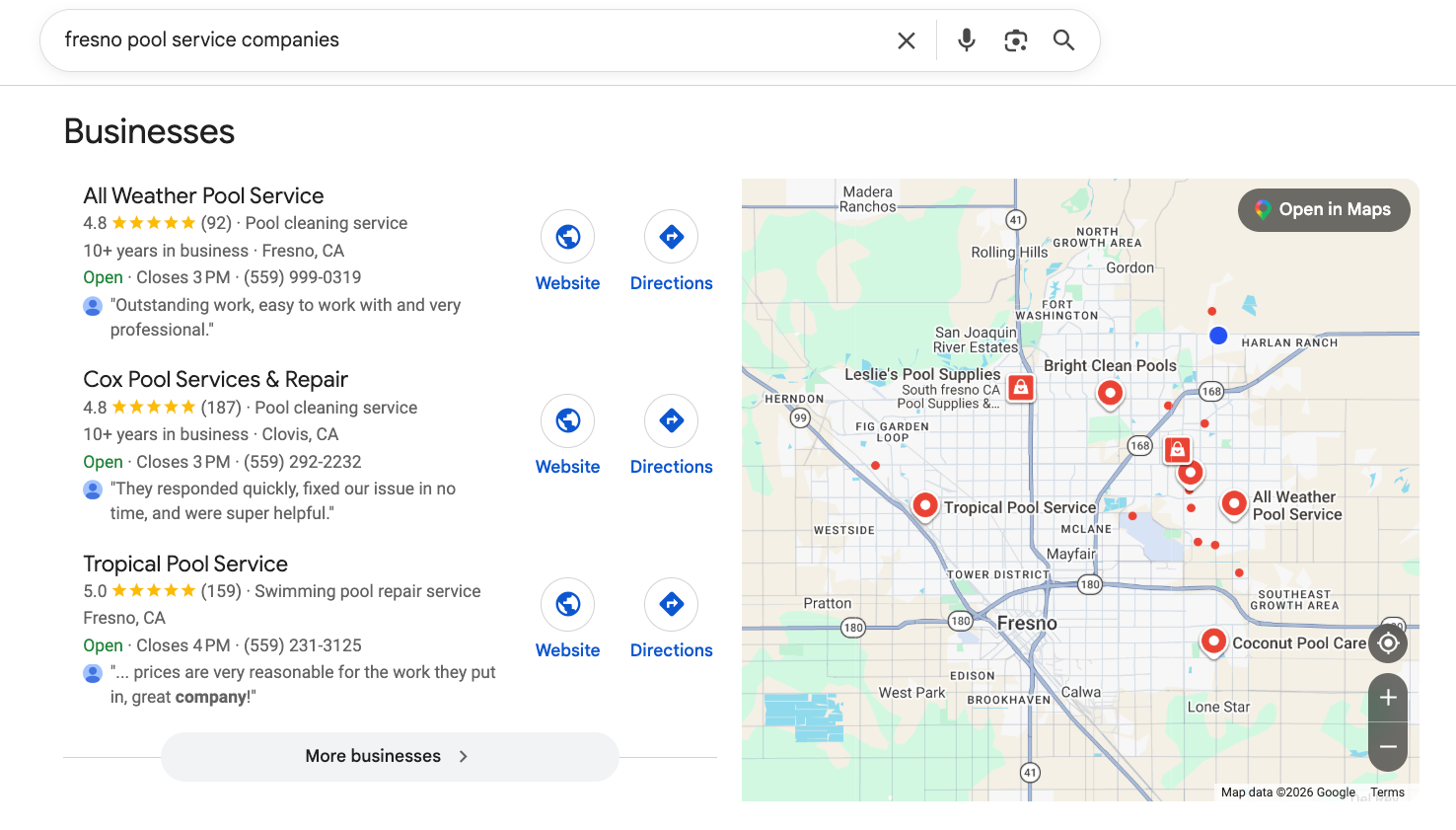
In the high school cafeteria of the internet, there is one table where everyone wants to sit. It’s right at the top of the page, it has a shiny map next to it, and it only has three chairs.
We call it the Google Local Map Pack.
If you’re a local business or a nonprofit, landing a spot in this “3-Pack” is the difference between being the life of the party and being the person who stayed home to organize their sock drawer. Since it’s 2026, the algorithm has gotten smarter, but the secret sauce is still surprisingly human.
Here is how to get your name on the guest list.
1. Relevance: Don’t Be a “Generalist”
Google wants to play matchmaker. If someone searches for “vegan gluten-free cupcakes,” Google isn’t going to show them a giant commercial bakery that might have a bran muffin.
- For Businesses: Don’t just list your category as “Restaurant.” Be the “Authentic Neapolitan Pizzeria” you were born to be.
- For Nonprofits: Instead of “Charity,” try “Youth Mentorship Program” or “Animal Rescue Shelter.”
- The Pro Tip: Fill out every single “Attribute.” If you are women-owned, have wheelchair accessibility, or offer free Wi-Fi, check the box. Google loves data like a toddler loves screen time.
2. Distance: You Can’t Fight Physics
You can’t convince Google your coffee shop in Clovis is “local” to someone searching in San Francisco. However, you can define your Service Area if you go to your customers (like a plumber or a mobile pet groomer).
Witty Warning: If you try to set your “business location” as a random park bench just to appear in a different zip code, Google will find out. Their AI is essentially Sherlock Holmes with a much bigger server budget.
3. Prominence: The “Street Cred” Factor
This is where the magic happens. Prominence is how “cool” Google thinks you are based on the rest of the web.
- Review Recency over Quantity: In 2026, having 500 reviews from 2022 is less impressive than having 10 reviews from last week. Google wants to see that you are currently relevant.
- Talk Back: Respond to every review. Yes, even the one from “GrumpyGreg42” who complained that your napkins were “too square.” Replying shows Google (and future customers) that the lights are on and someone is home.
The 2026 Checklist for Success
If you want to dominate the Map Pack, treat your Google Business Profile like a social media account, not a tax return.
| Action Item | Why It Matters | Frequency |
| Fresh Photos | Listings with recent photos get 42% more direction requests. | Weekly |
| Q&A Section | Pre-fill your own Q&A with common questions. Don’t wait for Greg. | Once |
| Weekly Posts | Use “Updates” to announce events, sales, or volunteer drives. | Weekly |
| NAP Consistency | Ensure your Name, Address, and Phone match your website exactly. | Always |
Why This Matters for Nonprofits
Many nonprofits think SEO is only for people selling widgets. Incorrect! When a donor searches “food bank near me” or a volunteer looks for “animal shelters,” the Map Pack is the first thing they see. If you aren’t there, you aren’t just losing “customers”—you’re losing impact.
The Bottom Line: Google doesn’t reward the biggest budget; it rewards the best behavior. Keep your profile active, keep your information accurate, and for heaven’s sake, keep those photos looking sharp.
How long has it been since you updated the “Business Description” on your Google profile?